
The Basics
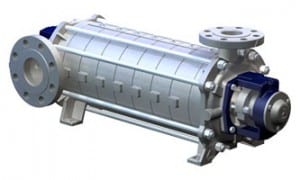 Centrifugal pumps use an impeller to create a low pressure zone at the impellers eye or open inlet, which is rotating. The pressure in the eye of the impeller is now lower than the atmosphere pressure acting on the product being pumped. As a result the water/product will flow into the low pressure zone/eye of the impeller and this creates kinetic energy which propels the fluid outward. The speed of the impeller determines how much energy is transferred into the fluid.
Head and Pressure
If the point at which fluid is discharged is straight up, the height at which the fluid stops rising and begins to fall is known as “shut off head.” Also called “maximum head,” it is influenced by the speed at which the shaft rotates and the impeller’s outside diameter. Any alterations in the pump’s capacity will change the head.
Centrifugal pumps use resistance against the flow of liquid to produce kinetic energy. The pump’s casing provides the first line of resistance by catching the fluid and thus making it move more slowly. This slowdown converts kinetic energy into pressure energy.
The Pressure Gauge Connected to the Discharge Pipe Line
It must be noted that pumps do not create pressure; all they create is flow. It is resistance to that flow in the discharge pipeline that is measured on a pump’s gauge.
“Head” is a term for a measurement or amount of the kinetic energy created by the pump. It is the height at which fluids would rise from the kinetic energy produced by the pump. Head is used rather than pressure as a measurement because unlike pressure, it will not change or be altered if the liquid’s specific weight or gravity changes.
Different Pump Head Measurements
Dynamic Discharge Head: Head on the discharge of the pump when operating.
Dynamic Suction Head/Lift: Head on the suction side of the pump when turned on.
Static Discharge Head: Head on the discharge of the pump when turned off.
Static Suction Lift: Vertical distance from the pump’s centreline to the surface of the liquid to be pumped
Static Suction Head: Head on suction side of the pump if head is higher than impeller when the pump is stationary.
Total Dynamic Head: Total head including friction head if the pump is running.
Total Static Head: Total head if the pump is stationary.
We Hope this Helps
We hope this has been helpful, but the best way we can help you is to have you call us at Pump Solutions Australasia: (08) 9408 1544.